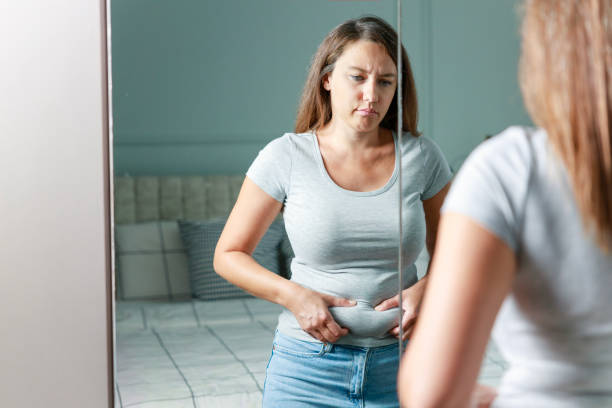
If you've ever looked in the mirror and thought, "Why won't this belly fat go away?", you're definitely not alone.
You might be eating well, exercising regularly and doing everything you're "supposed" to do — yet still have an area around your stomach that seems determined to stick around.
And this is where things can get confusing.
Because losing weight and reducing a stubborn area of fat are not necessarily the same thing.
For some people, the scales may be exactly where they want them to be, but they still have a pocket of pinchable fat around the lower abdomen, waist or sides that they'd love to reduce.
So, what actually works?
Let's take a closer look.
Why is belly fat so difficult to lose?
The first thing to understand is that you can't choose exactly where your body loses fat from.
When you lose weight through a calorie deficit, your body draws on stored energy from fat cells throughout the body. Genetics, hormones, age, sex and individual fat distribution all influence where your body tends to store and lose fat.
This is why you might lose weight from your face, arms or legs before noticing much difference around your stomach.
And unfortunately, doing hundreds of sit-ups doesn't specifically tell your body to burn the fat sitting over your abdominal muscles.
Exercise is still incredibly important for your overall health, fitness and body composition — but spot reduction isn't how fat loss works.
There is another type of belly fat to consider, too.
Not all abdominal fat is the same.
Subcutaneous fat is the soft, pinchable fat that sits underneath your skin.
Visceral fat sits deeper inside your abdomen, around your internal organs.
This distinction is particularly important when considering cosmetic fat-reduction treatments.
Non-invasive body contouring treatments such as cryolipolysis are designed to target localised subcutaneous fat, not visceral fat. The FDA also makes clear that non-invasive body contouring is intended to alter the shape of specific areas rather than treat obesity or produce overall weight loss.
That's one reason why having a proper assessment before treatment is so important.
So, what actually works for stubborn belly fat?
There isn't one answer that works for everyone.
For overall body-fat reduction, the foundations remain:
- a nutritious, balanced diet
- appropriate calorie intake
- regular physical activity
- resistance training
- adequate sleep
- good general health habits
But what if you've already done all of that?
What if you're relatively happy with your weight but have one particular area of stubborn, pinchable fat that you'd like to improve?
That's where non-surgical body contouring may be worth considering.
What is cryolipolysis?
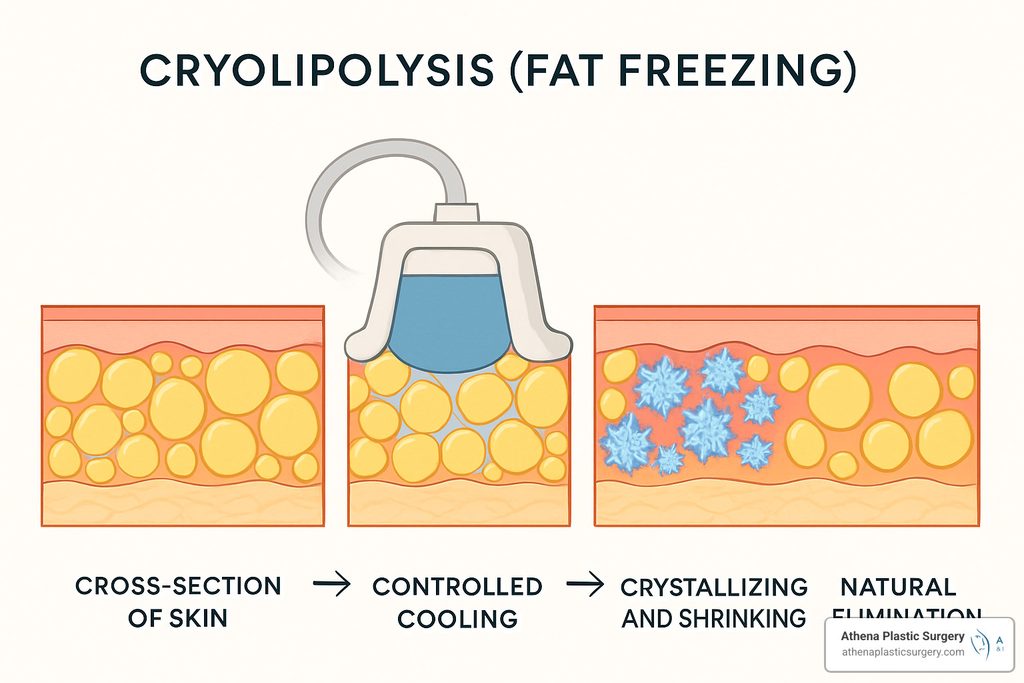
Cryolipolysis is commonly known as fat freezing.
It is a non-invasive body contouring technology that uses controlled cooling to target fat cells in a specific treatment area.
Fat cells are more sensitive to cold than the surrounding tissues. During cryolipolysis, the treatment applicator cools the targeted tissue, initiating a process that results in the gradual clearance of affected fat cells.
The body then naturally processes the treated cells over time.
The important word here is gradually.
This isn't a treatment where you walk out of the clinic having instantly lost your belly fat.
Instead, changes develop progressively over the weeks following treatment.
Research has found evidence that cryolipolysis can reduce localised subcutaneous fat, although results vary between individuals and treatment areas. A 2022 systematic review found that most of the included studies demonstrated significant reductions in localised fat, while also noting that more high-quality research is needed.
Can fat freezing help with belly fat?
It can — if the type of belly fat you're carrying is suitable for treatment.
This is an important distinction.
Fat freezing isn't designed to treat every type of stomach.
For example, if the main concern is:
- visceral fat
- significant overall obesity
- loose skin
- abdominal muscle separation
- bloating
- a medical condition
- or another cause of abdominal enlargement
then cryolipolysis may not be the appropriate solution.
However, if you have a localised pocket of subcutaneous fat that can be safely captured by an appropriate applicator, cryolipolysis may be an option for body contouring.
This is exactly why we don't believe in taking a "one treatment fits everyone" approach at Body Sculpt Clinic.
What about lower belly fat?
The lower abdomen is one of the areas people commonly want to improve.
You might hear it called:
- lower belly fat
- lower abdominal fat
- the "pooch"
- post-pregnancy belly
- stubborn tummy fat
But again, the appearance of the lower abdomen can be influenced by much more than fat.
Skin laxity, muscle tone, abdominal separation, previous pregnancy, body composition and even bloating can all contribute to the appearance of the stomach.
A good consultation should therefore look at the whole picture, rather than simply assuming that the answer is fat reduction.
Interestingly, research specifically investigating cryolipolysis of the lower abdomen has produced mixed findings. One randomised controlled trial found no significant difference following a particular single-treatment protocol, highlighting why individual assessment and realistic expectations are so important.
That's something I think is worth being honest about.
No reputable clinic should promise that fat freezing will work for everyone.
How much fat can fat freezing remove?
This is one of the most common questions we hear.
The answer isn't a single number that applies to everyone.
Results depend on factors including:
- the amount and distribution of subcutaneous fat
- the treatment area
- the applicator used
- the treatment protocol
- individual anatomy
- how your body responds to treatment
- whether more than one treatment is appropriate
Clinical studies have demonstrated reductions in localised fat thickness and circumference following cryolipolysis, but the results vary between studies and individuals.
And this is why "How many centimetres will I lose?" isn't something we should promise before seeing you.
Instead, the goal is to determine whether the treatment is appropriate for your body and what sort of result may realistically be achievable.
Is fat freezing a weight-loss treatment?
No.
This is one of the most important things to understand.
Cryolipolysis is a body contouring treatment, not a weight-loss treatment.
You shouldn't book fat freezing because you want to lose a significant amount of weight.
It's more appropriate for someone who is already relatively stable with their weight but has specific areas of localised fat that they would like to contour.
The FDA specifically states that non-invasive body contouring does not treat obesity and does not result in weight loss in the same way that weight-loss interventions do.
Think of it as:
Weight loss = reducing overall body weight/body fat
Body contouring = targeting specific areas to change their shape or appearance
They are related, but they're not the same thing.
How long does it take to see results?
Patience is important with cryolipolysis.
The body needs time to process the affected fat cells, so changes aren't necessarily immediate.
Research assessing outcomes at around 12 weeks has demonstrated reductions in abdominal circumference and fat thickness following cryolipolysis, although individual outcomes vary.
This means you shouldn't judge your result after just a few days.
Your body is doing the work gradually.
What if I have loose skin as well as belly fat?
This is another situation where assessment is important.
Sometimes the issue isn't simply "too much fat".
You may have a combination of:
Fat + loose skin + reduced muscle tone
In this situation, reducing fat alone may not produce the result you're hoping for.
Depending on your individual circumstances, another treatment — such as a skin-tightening treatment — may be more appropriate, or a combination approach may be considered.
This is why we always recommend an assessment rather than simply choosing a treatment based on a photo or a social media post.
Can diet and exercise get rid of stubborn belly fat?
They can absolutely help reduce overall body fat and improve your health and body composition.
But they can't guarantee that a particular stubborn pocket will disappear.
Everyone's body stores fat differently.
You may find that your weight has changed significantly but that one area remains surprisingly resistant.
That's where body contouring can potentially complement your healthy lifestyle.
It's not replacing diet and exercise.
It's about addressing a specific aesthetic concern that may remain despite your best efforts.
Is cryolipolysis suitable for everyone?
No — and that's actually a good thing.
A responsible body contouring clinic should be prepared to tell you when a treatment isn't appropriate.
There are medical and anatomical factors that need to be considered before cryolipolysis. For example, certain cold-sensitivity conditions and poor circulation in the treatment area can make fat freezing unsuitable.
There are also recognised potential side effects, including temporary numbness, redness, swelling, tenderness and sensitivity. Rare complications can occur, including paradoxical adipose hyperplasia, where the treated area unexpectedly becomes enlarged rather than reduced.
That's why your consultation matters.

So, what IS the best way to get rid of stubborn belly fat?
If you're carrying excess overall body fat, focusing on nutrition, exercise and healthy lifestyle habits is the foundation.
But if you're already close to your preferred weight and have a specific pocket of pinchable abdominal fat, non-surgical body contouring such as cryolipolysis may be worth investigating.
The most important step is determining what you're actually treating.
Is it subcutaneous fat?
Visceral fat?
Loose skin?
Muscle separation?
Or a combination?
Because the right treatment starts with the right assessment.
Considering fat freezing on the Sunshine Coast?
At Body Sculpt Clinic in Maroochydore, we take an assessment-first approach to body contouring.
Rather than simply looking at an area and deciding which treatment to put on it, we assess your individual concerns, body shape and the type of tissue present before discussing whether cryolipolysis is appropriate.
With extensive hands-on experience in cryolipolysis and thousands of treatments performed, our focus is on realistic expectations, appropriate treatment selection and natural-looking body contouring results.
If you're wondering whether your stubborn belly fat could be suitable for fat freezing, we'd love to help you work it out.
Book your consultation at Body Sculpt Clinic today.
Let's determine whether cryolipolysis is right for you — and, just as importantly, whether it isn't.
Frequently Asked Questions
Can fat freezing get rid of belly fat permanently?
Cryolipolysis targets fat cells in a specific treatment area, and the body gradually clears affected cells. However, remaining fat cells can still enlarge with future weight gain, so maintaining a stable weight and healthy lifestyle is important.
Is belly fat the same as visceral fat?
No. Belly fat can include both subcutaneous fat, which sits beneath the skin, and visceral fat, which surrounds internal organs. Cryolipolysis targets subcutaneous fat, not visceral fat.
How many fat-freezing treatments will I need on my stomach?
There isn't one treatment number that is right for everyone. It depends on your anatomy, the amount of suitable fat, your goals and the treatment plan developed during your consultation.
Can I lose weight with fat freezing?
Cryolipolysis is not a weight-loss treatment. It is designed for localised body contouring and reduction of specific areas of subcutaneous fat.
How soon will I see results after fat freezing?
Results develop gradually rather than immediately. Changes are commonly assessed over the following weeks, with clinical studies often evaluating outcomes around 8–12 weeks and beyond.
Is fat freezing painful?
Treatment sensations vary. During cryolipolysis, you may experience an intense cold sensation initially, along with pressure or pulling from the applicator. Temporary numbness, tenderness or sensitivity can occur afterwards.
Clinical References:
Resende L, Noites A, Amorim M. Application of cryolipolysis in adipose tissue: A systematic review. Journal of Cosmetic Dermatology. 2022.
Ravindran R, et al. Cryolipolysis and associated health outcomes, adverse events, and satisfaction: A systematic review and meta-analysis. Obesity Reviews. 2025.
U.S. Food & Drug Administration. Non-Invasive Body Contouring Technologies. Falster M, et al. Effects of cryolipolysis on lower abdomen fat thickness of healthy women and patient satisfaction: a randomized controlled trial. Brazilian Journal of Physical Therapy. 2020.